

Spider cranes have gained significant popularity in various industries due to their unique design and versatility. As a leading spider crane supplier, I am often asked about the stability of these remarkable machines. In this blog post, I will delve into the factors that contribute to the stability of spider cranes and discuss how we ensure the highest level of safety and performance in our products.
Understanding Spider Cranes
Before we explore the stability of spider cranes, let's first understand what they are. Spider cranes are compact, lightweight cranes that are designed to operate in confined spaces. They are characterized by their long, articulated booms and multiple outriggers, which provide a wide base of support. These cranes are commonly used in construction, maintenance, and industrial applications where traditional cranes may not be suitable.
Factors Affecting Spider Crane Stability
The stability of a spider crane is influenced by several factors, including its design, weight distribution, outrigger configuration, and operating conditions. Let's take a closer look at each of these factors:
Design
The design of a spider crane plays a crucial role in its stability. A well-designed spider crane should have a low center of gravity, which helps to prevent tipping. The boom should be constructed from high-strength materials to ensure maximum durability and stability. Additionally, the crane should be equipped with advanced safety features, such as load sensors and anti-tipping systems, to further enhance its stability.
Weight Distribution
Proper weight distribution is essential for maintaining the stability of a spider crane. The crane's weight should be evenly distributed across its outriggers and the ground. This helps to prevent excessive stress on any one part of the crane and reduces the risk of tipping. Our spider cranes are carefully designed to ensure optimal weight distribution, even when carrying heavy loads.
Outrigger Configuration
The outrigger configuration of a spider crane is another important factor in its stability. Outriggers are extendable legs that provide additional support to the crane. They should be positioned correctly to ensure a wide base of support and to distribute the crane's weight evenly. Our spider cranes are equipped with adjustable outriggers that can be extended to different lengths, allowing for greater flexibility and stability in various operating conditions.
Operating Conditions
The operating conditions of a spider crane can also have a significant impact on its stability. Factors such as wind speed, ground conditions, and the angle of the boom can all affect the crane's stability. It is important to operate the crane within its specified limits and to take appropriate precautions to ensure safe operation. Our spider cranes are designed to withstand a wide range of operating conditions, but it is still important to follow the manufacturer's guidelines and safety recommendations.
Ensuring Stability in Our Spider Cranes
As a spider crane supplier, we take the stability of our products very seriously. We use the latest technology and engineering techniques to design and manufacture spider cranes that are both safe and reliable. Here are some of the steps we take to ensure the stability of our spider cranes:
Advanced Design and Engineering
Our spider cranes are designed and engineered by a team of experienced professionals who have a deep understanding of crane stability. We use computer-aided design (CAD) software to model and analyze the crane's design, ensuring that it meets the highest standards of safety and performance.
High-Quality Materials
We use only the highest-quality materials in the construction of our spider cranes. Our booms are made from high-strength steel, which provides maximum durability and stability. The outriggers are also constructed from high-quality materials and are designed to withstand heavy loads and harsh operating conditions.
Rigorous Testing
Before our spider cranes are released to the market, they undergo rigorous testing to ensure their stability and performance. We test the cranes under a variety of operating conditions, including different load capacities, wind speeds, and ground conditions. This helps us to identify any potential issues and to make any necessary adjustments to the crane's design or operation.
Safety Features
Our spider cranes are equipped with a range of advanced safety features to ensure the highest level of stability and safety. These features include load sensors, anti-tipping systems, and emergency stop buttons. The load sensors monitor the weight of the load being lifted and alert the operator if the crane is approaching its maximum capacity. The anti-tipping systems help to prevent the crane from tipping over by automatically adjusting the outriggers and the boom angle. The emergency stop buttons allow the operator to quickly stop the crane in case of an emergency.
Types of Spider Cranes and Their Stability
There are several types of spider cranes available on the market, each with its own unique features and advantages. Let's take a look at some of the most common types of spider cranes and their stability:
2 Ton Spider Crane
The 2 ton spider crane is a popular choice for a variety of applications, including construction, maintenance, and industrial work. This type of crane is capable of lifting heavy loads and is designed to provide maximum stability and safety. The 2 ton spider crane is equipped with adjustable outriggers and a long, articulated boom, which allows for greater flexibility and reach.
Small Spider Crane
The small spider crane is a compact and lightweight crane that is ideal for use in confined spaces. This type of crane is easy to maneuver and can be transported easily from one location to another. Despite its small size, the small spider crane is still capable of lifting heavy loads and is designed to provide excellent stability and safety.
Mini Crawler Spider Crane
The mini crawler spider crane is a versatile crane that is designed to operate on rough terrain. This type of crane is equipped with crawler tracks, which provide excellent traction and stability on uneven surfaces. The mini crawler spider crane is also capable of lifting heavy loads and is ideal for use in construction, mining, and other industrial applications.
Mobile Spider Crane
The mobile spider crane is a self-propelled crane that is designed to be easily transported from one location to another. This type of crane is equipped with a hydraulic system that allows for quick and easy setup and operation. The mobile spider crane is also capable of lifting heavy loads and is ideal for use in a variety of applications, including construction, maintenance, and industrial work.
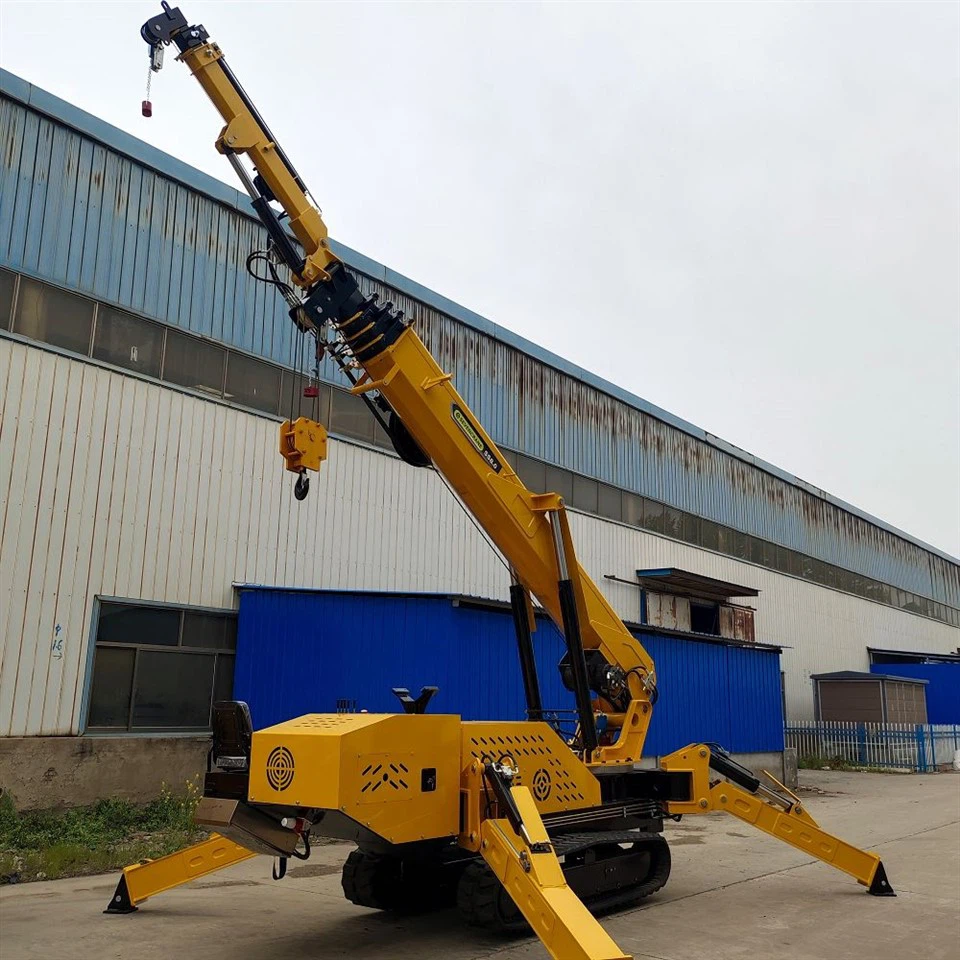

Electric Spider Crane
The electric spider crane is a clean and efficient alternative to traditional diesel-powered cranes. This type of crane is powered by an electric motor, which produces zero emissions and is quieter than diesel engines. The electric spider crane is also designed to provide excellent stability and safety, making it ideal for use in indoor and outdoor applications.
Contact Us for Your Spider Crane Needs
If you are in the market for a spider crane, we invite you to contact us to discuss your specific requirements. Our team of experts will be happy to help you choose the right spider crane for your application and to provide you with all the information you need to make an informed decision. We offer a wide range of spider cranes, including 2 Ton Spider Crane, Small Spider Crane, Mini Crawler Spider Crane, Mobile Spider Crane, and Electric Spider Crane. We also offer a range of services, including installation, maintenance, and repair.
References
- American Society of Mechanical Engineers (ASME). (2018). Safety Standards for Cranes, Derricks, Hoists, and Monorails.
- International Organization for Standardization (ISO). (2016). Cranes - Safety - General Requirements.
- Occupational Safety and Health Administration (OSHA). (2019). Cranes and Derricks in Construction.
- The National Commission for the Certification of Crane Operators (NCCCO). (2020). Crane Operator Certification Program.