

If you’ve ever stepped onto a job site—whether it’s a tight residential rooftop, a narrow urban alley, or a dense forested area where space is at a premium—you know how critical it is to have equipment that can adapt. As a supplier of compact lifting solutions, I’ve fielded a lot of questions from operators, contractors, and project managers about 8 ton spider cranes: the ones that balance strength, maneuverability, and versatility better than almost any other machine on the market. A big part of that versatility comes down to the attachments you pair with it. The right attachment can turn your crane from a specialized lift tool into a multi-purpose workhorse, capable of handling everything from fragile glass panels to heavy construction materials without extra equipment or manpower.
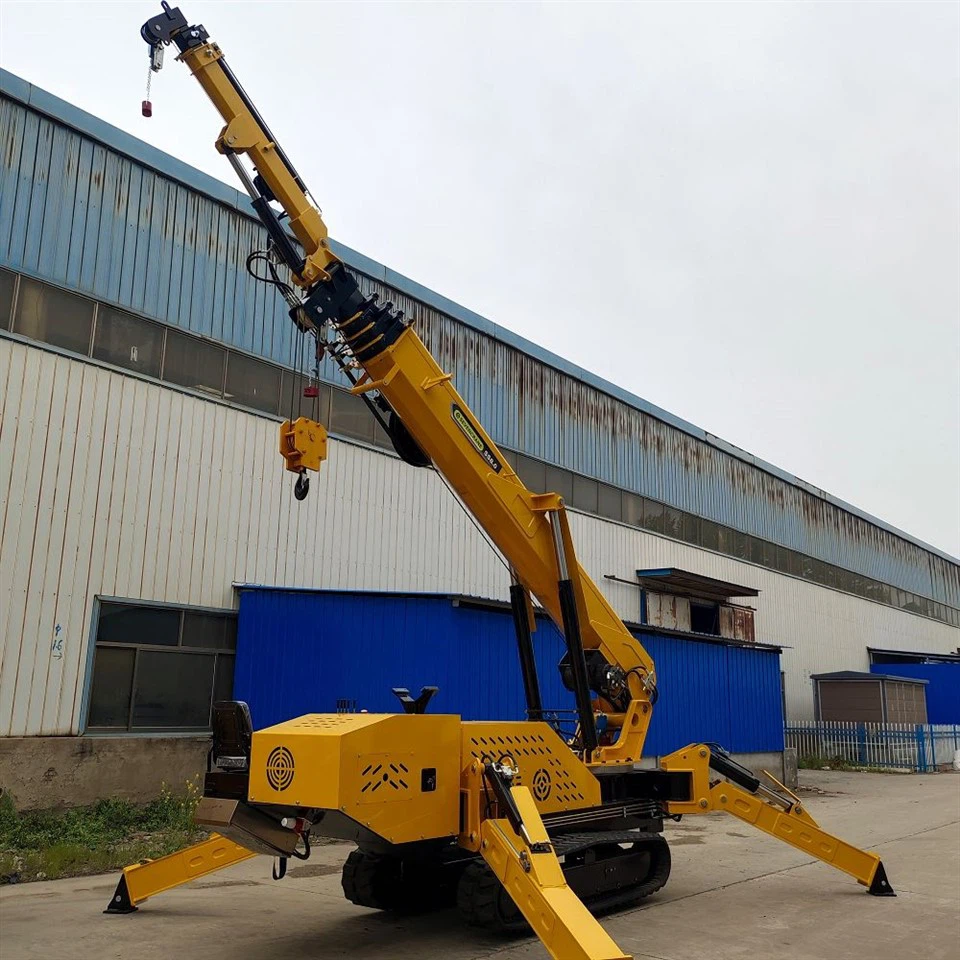
Let’s start with the basics: an 8 ton spider crane isn’t your average large crawler crane. Its compact, foldable design, often paired with outriggers that extend to stabilize it on uneven or unevenly sloped surfaces, means it can access spots where bigger cranes can’t. That’s why choosing the right attachment matters—it’s not just about lifting capacity, but about matching the attachment’s design to the unique constraints of the job. Whether you’re working on a commercial HVAC installation, moving utility poles, or placing heavy steel beams in a constrained area, there’s an attachment that fits, and it’s important to know which ones work best for an 8 ton model.
First on the list, and one of the most commonly used attachments for any spider crane, is the main lifting hook. Wait, I know that sounds too basic, but let’s clarify: not all hooks are the same for an 8 ton spider crane. Unlike smaller cranes, like the 2 Ton Spider Crane or 3 Ton Spider Crane which are built for lighter, more precise lifts, an 8 ton model needs a heavy-duty hook rated to handle its full capacity. These hooks are typically made from forged steel, designed to withstand the tension of lifting 8 tons at maximum outreach, and many come with a safety latch to prevent loads from slipping mid-lift. I’ve seen operators cut corners here, using a hook intended for a smaller crane, and it’s a mistake that can lead to costly delays or, worse, safety hazards. Always pair your hook with a load chart specific to your 8 ton spider crane, and never exceed the rated capacity for your model’s outreach—even a few feet more can drastically reduce lifting strength.
Next up, for jobs that require more precision than a standard hook can offer, is a vacuum lifting Attachment. This is a game-changer for jobs involving glass panels, metal sheets, stone slabs, or other flat, non-porous materials. For an 8 ton spider crane, vacuum attachments come in different sizes, with some capable of lifting up to 8 tons worth of material depending on the surface. What I love about these is that they eliminate the need for slings, which can scratch or damage fragile materials. We often see this on high-rise construction projects, where crews need to move large glass panes onto rooftops with limited space—an 8 ton spider crane with a vacuum attachment can navigate tight rooftop access points, stabilize on even narrow outriggers, and place glass panels with millimeters of precision. It’s also perfect for renovation projects, where you might be lifting stone countertops or marble tiles into a space that’s too small for a forklift or a bigger crane. Just a note: make sure the vacuum attachment is rated for the type of surface you’re working with—porous materials like wood or concrete won’t work well with vacuum lifts, so you’ll need a different attachment for those.
If your project involves heavy, awkwardly shaped loads that don’t lend themselves to a hook or vacuum attachment, a lifting beam is a must. Lifting beams (also called spreader bars) are designed to distribute the weight of a load evenly across two or more points, reducing stress on the crane’s lifting hook and preventing the load from swinging or tilting. For an 8 ton spider crane, we recommend adjustable lifting beams that can be customized to match the size and weight of your load. Whether you’re lifting steel pipes, structural beams, or prefabricated wall panels, a lifting beam ensures the load is balanced, which is critical when working in tight spaces where swinging could damage nearby structures or materials. I’ve had customers use 8 ton spider cranes with lifting beams to place utility poles in narrow alleys— the beam kept the pole steady as it was maneuvered around power lines and into a tight excavation spot, a job that would have required extra equipment if they’d just used a hook.
Another popular attachment for 8 ton spider cranes is a work platform, sometimes called a man basket or personnel basket. Wait, there are strict regulations about using these, so I always stress that they need to be OSHA-compliant, and only used for lifting workers when the job can’t be done safely from the ground. For an 8 ton model, the work platform is rated to hold up to the crane’s capacity (usually around 800 to 1,000 pounds for the platform and workers, depending on the model), making it perfect for tasks like maintaining rooftop HVAC units, trimming large trees near buildings, or installing exterior siding on narrow homes. The best platforms for spider cranes are compact and foldable, so they don’t add too much bulk when the crane is moving through tight spaces. I remember a customer who used their 8 ton spider crane with a work platform to repair a commercial flat roof on a building that had no side access for a lift—they couldn’t fit a larger crane in the parking lot, so the spider crane moved through a narrow loading dock, set up on the rooftop (which was flat and provided stable ground for outriggers), and allowed workers to make repairs without scaffolding. It saved them thousands of dollars in rental costs and time on the job.
For utility and forestry-related projects, a grapple attachment is essential. Grapples come in a few types—bucket grapples for lifting debris, tree grapples for moving logs, or rock grapples for handling construction rubble. An 8 ton spider crane’s strength makes it ideal for heavy-duty grapple work, especially in remote areas where ground-based equipment can’t navigate rough terrain. Crawler Spider Crane models, in particular, are designed with tracks that give them better traction on mud, gravel, or uneven forest floors, so pairing one with a grapple lets you clear brush, move fallen trees, or load construction debris into dump trucks without needing a large bulldozer. We’ve had utility companies use 8 ton spider cranes with grapples to clear power lines after storms, working in areas where roads are blocked, and the compact size lets them get closer to damaged lines without disturbing surrounding trees or property. Just make sure the grapple’s jaws are rated to handle the weight of the load, and that the crane’s outriggers are properly set up to stabilize it when lifting heavy debris—swinging debris is a common hazard, so positioning is key.
Let’s not forget about slings and shackles, even though they’re often seen as accessories rather than attachments. But for an 8 ton spider crane, choosing the right sling is critical for safety and versatility. Wire rope slings are durable and good for heavy loads, while nylon or polyester slings are gentler on fragile materials, like the glass or stone I mentioned earlier. Shackles, which connect the sling to the crane’s hook, come in different types—clevis shackles for heavy-duty use, screw pin shackles for quick connections—and they need to be rated to match the crane’s capacity. A common mistake I see is using a sling that’s too small, which can stretch or break under the weight of an 8 ton load. Always check the sling’s working load limit (WLL) before each use, and inspect it for fraying, kinks, or damage before attaching it to your crane.
Now, let’s talk about choosing the right attachment for your specific job. The key here is to match the attachment’s size, capacity, and design to your 8 ton spider crane, and to the unique constraints of your project. If you’re working in a tight urban area where space is limited, a vacuum lifting attachment or a compact work platform might be your best bet. If you’re on a rugged worksite like a forest or a rocky hillside, a crawler spider crane with a grapple will give you the mobility and strength you need. And if you’re lifting heavy, awkward loads, a lifting beam will keep the load stable and prevent damage to both the load and the crane.
It’s also important to remember that while smaller cranes like the 2 Ton Spider Crane or 3 Ton Spider Crane are great for light, precise lifts, they can’t handle the capacity or heavy-duty attachments that an 8 ton model can. If you’re a contractor who often moves between small residential jobs and larger commercial projects, an 8 ton spider crane is a versatile middle ground, and choosing the right attachments lets you get the most out of your investment. Mobile Spider Crane models, which have wheels for easy transport between job sites without needing a trailer, make it even more convenient to bring the right crane and attachment to wherever you’re working.
At the end of the day, the right attachment turns a good crane into a great tool, and as a supplier, I’ve seen firsthand how the right combination can make a job go smoothly, safely, and on budget. Whether you’re new to spider cranes or looking to expand your fleet, understanding which attachments work with an 8 ton model is key to making the most of your equipment.
If you’re ready to explore which attachments would work best for your specific project, or want to learn more about 8 ton spider cranes and their capabilities, don’t hesitate to reach out to our team to discuss your needs. We’re here to help you find the right equipment and attachments to get the job done right, no matter how tight the space or how heavy the load.

References
- Occupational Safety and Health Administration (OSHA). "Crane and Hoist Standards." Accessed June 2024.
- International Standards Organization (ISO). "Crane Safety – Attachments and Accessories." ISO 12481, 2022.
- Spider Crane Manufacturers Association. "2023 Compact Lifting Equipment Usage Report." Published by the Global Construction Equipment Association, 2023.
- American National Standards Institute (ANSI). "Safety Requirements for Spider Cranes." ANSI/SIA A92.22, 2021.