

Electric Forklift
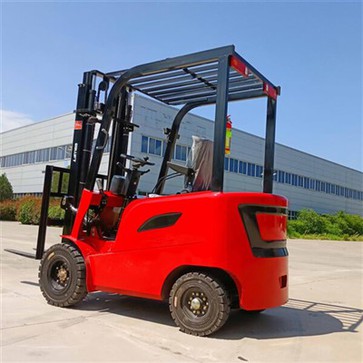
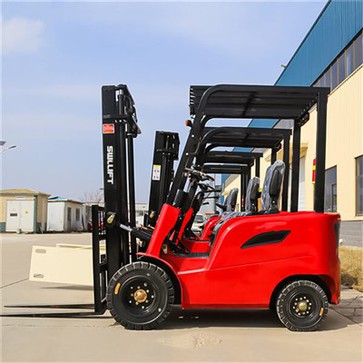
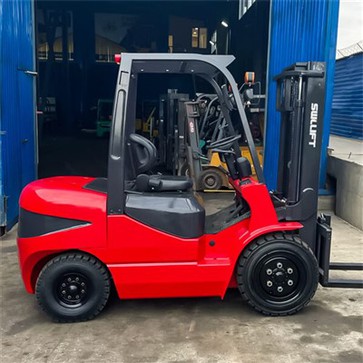
Electric forklifts are a subtype of forklift that is powered exclusively by electricity, rather than traditional sources such as gas or diesel. These models offer an effective, quiet and powerful way to utilise forklift technology in even tight, enclosed spaces. An electric forklift is powered by an electric motor instead of the traditional internal combustion engine. Its job is to lift and transport material for short distances just like other forklifts. They use lower-operated horizontal forks that you can raise or lower to load, transport, or unload goods.
Advantages of Electric Forklift
Environmental Sustainability
Electric forklifts are a sustainable option for industrial and construction applications. Since they operate on batteries instead of fuel, they do not emit gases into the atmosphere. An electric forklift is a clean option that can help businesses conserve energy.
Safe Application And Simple Maintenance
Electric forklifts are very safe. They do not emit gases, making them safe for health- and food-related applications. They are also very quiet during operation and require minimal maintenance since they have fewer moving parts.
Simple Operation
Electric forklifts are very simple to operate. Since they lack transmissions, electric forklift operators don't need to work a clutch pedal or increase revs for an incline start. Electric forklifts can also accelerate rapidly and are easy to maneuver. An electric motor can produce torque from zero rpm, allowing operators to accelerate quickly and easily move around factories and warehouses.
Power
An electric forklift's torque allows it to move heavy objects easily. While electric vehicles are quiet and simple to operate, they provide adequate power to lift and move the objects they need to maneuver.
Cost-effectiveness
An electric forklift's minimal maintenance requirements can help companies save money on repairs over time. Electric forklift power sources also help companies save money. Batteries are rechargeable and reusable, and electric forklifts eliminate the need to purchase fuel.
Minimal Waste Fluids
Since electric forklifts operate on batteries instead of fuel, they release minimal waste fluids. This eliminates the need for operators to handle fuel and reduces the risk of fire.




Why Choose Us
Our Factory
SWLLIFT is a leading manufacturer with 30 years of industry experience and a 9,900 square meter factory space. We have an excellent reputation in the field of aerial work platforms and have brought our products and expertise to the global market with more than 10+ years of export experience.
Rich experience
We have more than 20 production lines and are able to produce more than 5,000 high-quality aerial work platforms every year. At SWLLIFT, we have more than 500 employees, all of whom are experienced and skilled professionals, committed to providing customers with the best quality products and services.
Our products
The company's product range is extensive, covering seven series of aerial work platforms, including straight boom, articulated, scissor, spider, telescopic, mast and vehicle-mounted, as well as material lifting equipment such as spider cranes, micro crawler cranes, truck cranes, and material handling equipment such as forklifts and pickers.
our service
No matter where you are, our global service network will provide you with considerate technical support and after- sales service.
Types of Electric Forklift
Electric Counterbalance Forklifts
Electric counterbalance forklifts are similar to standard LP forklifts. Capacities may shift depending on the forklift size and the size of the battery, which serves as the counterbalance. These are versatile, traditional pieces of equipment for indoor operations. In warehouses, 3-wheel electric can be a strong selection thanks to their smaller footprint and tighter turning radius. Electric pneumatic forklifts are growing in popularity thanks to their power and eco-friendly operation. Toyota's 80V Electric Pneumatic can meet outdoor challenges from lumber yards to ports. Altogether, electric counterbalance forklifts are solid options for businesses interested in fuel-efficient solutions that fit multiple functions.
Stand Up Rider Forklifts
Stand Up Rider forklifts are unique because operators stand during their use. Operators have their right side pointing toward the forks to easily check the front and the rear of their forklift. These electric forklifts are ideal for big box stores and dock-to-stock operations thanks to their easy entry/exit process for operators. They're also ideal for narrower aisles since they can be used in spaces as narrow as 10-foot widths. Businesses with very heavy products aren't a fit for stand up riders, but they're ideal for consumer packaged goods with capacities up to 4,000 pounds.
Order Pickers
Order pickers are specifically designed for use in warehouses and order fulfillment centers. Operators control order pickers from a platform that moves with the forks, lifting operators up to 32.5 feet in the air. These machines have many safety features to reduce risks for their operators. They can also be outfitted to work with wire guidance systems in the warehouse floors to make operating even easier. These are essential pieces of equipment for less than full pallet put away and picking. Order pickers are not used for full pallet put away or full pallet retrieval. Facilities will need additional equipment for stocking the warehouse shelves.
Reach Trucks
Reach trucks are ideal fits for warehouses and distribution centers for putting away and retrieving full pallets. This specialized piece of equipment uses a folding pantograph on the mast to reach the fork into racking. Reach trucks can be single reach or double reach. This is key for optimizing warehouse space for more storage because reach trucks can move double-deep pallets. These are another stand-up model for operators that help with visibility for their high-reaching masts of up to 42 feet. Single reach models can move up to 4,500 pounds of product, but double reach trucks have lower capacities due to the longer pantograph. Nevertheless, for warehouses looking to store the maximum amount of product, reach trucks are essential.
Electric Turret Trucks
Turret trucks are another electric forklift option for very narrow aisles. These forklifts can operate in aisles as narrow as 7-foot widths thanks to their unique mast and forklift carriage. The fork face can swing up to 90 degrees left and right on a chain turret. This lets operators pick up loads without ever having to move their forklift left or right. Turret trucks are a great way to fit more aisles and racks into a warehouse without adding on to the building. They're also relatively comfortable and easy to use once operators are certified on the swinging forkface. If your warehouse needs to be optimized, consider using turret trucks to get the most out of your square footage.
Factors to Consider When Choosing an Electric Forklift
Lifting Capacity
The first and foremost consideration is the lifting capacity your business demands. Evaluate the average weight of the loads your forklift will handle. Make sure to choose a model that comfortably accommodates your maximum load requirements.


Battery Technology
The heart of any electric forklift is its battery. Advances in battery technology have led to various options, such as lithium-ion and lead-acid batteries. Lithium-ion batteries offer longer life cycles and faster charging times, making them a preferred choice for businesses with demanding operational schedules.
Run Time and Charging Speed
Assess the forklift's run time on a single charge and the time it takes to recharge. This is crucial for maintaining seamless operations without unnecessary downtime. Look for models with quick charging capabilities, especially if your business runs multiple shifts.


Indoor or Outdoor Use
Consider your working environment. Some electric forklifts are specifically designed for indoor use, while others are built to withstand outdoor conditions. Ensure the chosen model aligns with your operational setting for optimal performance and longevity.
Maneuverability and Turning Radius
Efficient maneuverability is essential for navigating through tight spaces in warehouses. Assess the forklift's turning radius and overall agility to ensure it meets the spatial constraints of your work environment.


Tire Type
The type of tires on your electric forklift impacts both indoor and outdoor performance. Choose between cushion tires suitable for smooth indoor surfaces or pneumatic tires for outdoor applications, providing better traction on uneven terrain.
The Working Principle of an Electric Forklift
The working principle of an electric forklift involves the use of an electric motor and battery to power the vehicle and perform lifting and material handling tasks. Here's a breakdown of the working principle:
Electric motor
Electric forklifts are equipped with an electric motor that generates torque to drive the wheels and perform other functions. The motor is powered by a battery pack, which provides the necessary electrical energy.
Battery pack
The battery pack serves as the energy source for the electric motor. It typically consists of multiple rechargeable batteries, such as lead-acid or lithium-ion batteries. The battery pack is either integrated into the forklift or can be easily removable for charging.
Motor controller
The motor controller is responsible for regulating the power supply to the electric motor. It manages the flow of electricity from the battery pack to control the speed and torque of the motor, enabling precise movement and control of the forklift.
Hydraulic system
Electric forklifts use a hydraulic system to operate the lifting mechanism and control the forks. The hydraulic pump, powered by the forklift's electric motor, pressurizes hydraulic fluid, which then flows to the cylinders to move the forks up and down.
Components of Electric Forklift
Mast
The mast is a vertical device at the front of the forklift's frame that raises and lowers the forks and carriage. The mast comes in duplex, triplex, and quad designs, with different lift height options. The mast also features lift and tilt cylinders that control the carriage's raising and tilting movements.
With its two mast stages, the duplex mast has the lowest possible lift height and weight capacity, but it is generally the most affordable option. The triplex mast's three mast stages increase the lift height and load capacity. The quad mast has four mast sections and can lift the biggest loads.
The cabin's height will determine how much lower the mast can be reasonably positioned after it collapses. The collapsed height of a two-stage mast will be the same as the highest point of the cabin, whereas that of a triplex or quad mast will be less.
Power Source
Forklifts can be run by either an internal combustion engine or a battery pack. Most forklifts run on diesel or gas-powered internal combustion engines (ice), housed underneath or behind the driver's seat in the vehicle's back. Forklifts that run on propane have the fuel tank conveniently located outside the vehicle.
Electric batteries are another common power source, which can be found underneath the driver's seat or within the lift's cargo area. The number of cells inside a battery might vary from one battery size to another. The battery identification code specifies the style, quantity of cells and plates, cell layout, and cell amp/hr. Electric forklifts require regular upkeep because they are typically used in confined locations like warehouses and factories.
Fork
The forks of a forklift are the most fundamental part. They connect to the carriage and are in constant touch with the material in transit. The forks are available in various sizes and configurations to meet various needs.
You can also have versions that are entirely tapered, have tire forks, are made of tin plates, or are spark-resistant. The carriage of some models can be shifted to either side with an optional attachment called a side shifter. You can also extend the forks apart using an optional fork positioner, and you may position two pallets side by side by attaching a dual load handler.
Counterweight
The counterweight is a weight mounted on the back of the machine and serves to balance out the weight of the lifted load. Counterweights are typically large and proportionate to the maximum load weight to prevent the lift truck's lifting capacity from being reduced.
During lifting and moving operations, the counterweight contributes to the stability and security of the lift truck by acting as a counterbalance. The counterweight in ice forklifts shifts up or down depending on the weight of the load being lifted, maintaining the lift truck's center of gravity and preventing it from tipping over.
Load Backrest
A load backrest is a level, usually movable surface fastened to the forklift's carriage to separate the driver from the load. This component stops the load from slipping back, which could cause harm to the user. The load backrest can also be an extra stabilizing surface when lifting and transporting heavy objects. The forklift mast and its components are extremely vulnerable to damage from loads. Hence the backrest is crucial for their protection.
How to Maintain Electric Forklift
Identify Your Forklift Maintenance Goals
Understanding your safety and maintenance priorities and setting a clear plan and schedule will help you keep on track with essential upkeep.For engine-based forklift trucks, the standardisation and similarity of parts to cars mean that the trucks are often easily repaired in-house. Whereas for an electric forklift service, you'll find that your truck and its battery have warranties that require service by an authorised engineer. On a daily basis, there are regular maintenance processes that need to be followed to protect equipment and maximise uptime.
Protect The Power Supply
Forklift operators should carry out daily checks to ensure their forklifts are safe to drive. For engine-powered vehicles, forklift maintenance of the power supply is quite intuitive. If your truck runs out of fuel, your operator refuels and there is no downtime before getting back to work. Monthly, you will want to carry out lift truck maintenance like changing engine oil, cleaning the air filter and lubricating the chassis.
Electric forklift services require regularly checking, cleaning and charging the battery as part of that routine, along with checking the electrolytes. Ensuring electrolyte levels are adequate avoids sulphation of the plates, which can otherwise reduce battery capacity and cause damage over time.
Cleaning batteries regularly is essential to remove any build-up of dust or dirt, which can damage the battery and reduce its lifespan.
When charging, batteries shouldn't be unplugged before this is complete. Like many aspects of electric forklift maintenance, you may not see the effects immediately, but unplugging too early actually chips away at the life of the battery. Once fully charged, you will need to ensure that the batteries are topped up with deionised or distilled water to the correct level.
Prepare For Periods Of Downtime Correctly
As part of your forklift maintenance plan, you should store your forklift trucks in a cool, dry environment to minimise disintegration of parts and oil overheating in engine-powered vehicles.
For electric forklifts, be sure to top up the battery fluid to the correct level before disconnecting batteries/trucks from the mains supply to prevent the battery discharging. Batteries should never be allowed to discharge to less than 20% since they risk irreparable damage. If possible, avoid leaving the forklift inactive for long periods to reduce electric forklift repair. You'll usually refresh-charge batteries regularly, but you'll definitely need to charge batteries periodically to maintain optimal condition.
FAQ
As one of the most professional electric forklift manufacturers and suppliers in China, we're featured by quality products and low price. Please rest assured to buy high-grade electric forklift for sale here from our factory.
easy operation all terrain electric forklift, electric forklift, 4 wheel electric forklift