

Hey there! As a supplier of crawler spider cranes, I often get asked about what kind of training is needed to operate these bad boys. So, I thought I'd sit down and write this blog to share all the deets with you.
First off, let's talk about what a crawler spider crane is. It's a super versatile piece of equipment that can be used in all sorts of construction and industrial settings. Whether you're working on a small building project or a large-scale infrastructure job, a crawler spider crane can come in really handy. We offer different types of spider cranes on our website, like the 1 Ton Spider Crane, Mobile Spider Crane, and Large Spider Crane.
Now, onto the training part. The training required to operate a crawler spider crane isn't something you can just brush off. It's crucial for the safety of the operator, the people around the worksite, and the integrity of the equipment itself.
Basic Safety Training
The very first step in the training process is basic safety training. This covers all the general safety rules and regulations that apply to any construction or industrial worksite. Operators need to learn about things like personal protective equipment (PPE). That means wearing hard hats, safety glasses, steel - toed boots, and high - visibility vests at all times. They also need to understand how to handle emergencies, such as fires, spills, or medical situations on the site.
Another important aspect of safety training is learning about the stability of the crane. Crawler spider cranes are designed to be stable, but if they're not set up correctly or if the operator makes a mistake, they can tip over. So, operators are taught how to level the crane on different terrains, how to use outriggers properly, and what the load limits are. Overloading a crane is a huge no - no, as it can lead to catastrophic failures.
Technical Training
After the basic safety training, it's time for the technical stuff. Operators need to have a good understanding of the crane's controls. Crawler spider cranes usually have a control panel with various levers, buttons, and switches. Each one of these controls a different function of the crane, such as lifting, lowering, swinging, and telescoping the boom.
Learning how to read the crane's load charts is also a key part of technical training. These charts show the maximum load that the crane can lift at different boom lengths and angles. Operators need to be able to look at these charts and determine if a particular lift is safe or not. It's not as simple as just knowing the weight of the load; they also have to take into account the position of the load, the angle of the boom, and the condition of the ground.
Practical Training
Theory is great, but practical training is where the real learning happens. In practical training, operators get hands - on experience with the crawler spider crane. They start with simple tasks, like setting up the crane on a flat and stable surface and making a few basic lifts. As they gain more confidence and skill, they move on to more complex operations, such as lifting loads in tight spaces or at unusual angles.
During practical training, instructors closely monitor the operators. They give feedback on their performance, point out any mistakes, and teach them how to correct them. It's a trial - and - error process, but it's the best way to learn how to operate a crane safely and efficiently.
Maintenance Training
A well - maintained crane is a safe and reliable crane. That's why maintenance training is an important part of the overall training program. Operators need to learn how to perform basic maintenance tasks, such as checking the hydraulic fluid levels, inspecting the cables and ropes for wear and tear, and lubricating moving parts.
They also need to know when to call in a professional for more in - depth maintenance. For example, if there's a strange noise coming from the crane or if the controls seem to be malfunctioning, they should know not to try and fix it themselves but to report it immediately.
Certification
Once an operator has completed all the necessary training, they need to get certified. Certification is a way to prove that they have the knowledge and skills required to operate a crawler spider crane safely. There are different certification bodies out there, and the requirements may vary slightly from one to another.
To get certified, operators usually have to pass a written exam and a practical test. The written exam covers all the theoretical knowledge they've learned during the training, such as safety rules, load charts, and crane controls. The practical test assesses their ability to operate the crane in a real - world scenario.
Continuing Education
The training doesn't stop once an operator gets certified. The world of crawler spider cranes is constantly evolving, with new technologies and safety standards being introduced all the time. That's why continuing education is so important.
Operators should attend regular refresher courses to keep their skills sharp. These courses may cover new safety regulations, updated load charts, or new features on the latest models of crawler spider cranes. They can also learn about best practices from other experienced operators.
Why Choose Our Crawler Spider Cranes
At our company, we're not just about selling crawler spider cranes. We're also committed to providing our customers with the support they need to operate our equipment safely and effectively. We offer comprehensive training programs for all our customers, whether they're first - time operators or experienced professionals looking to upgrade their skills.

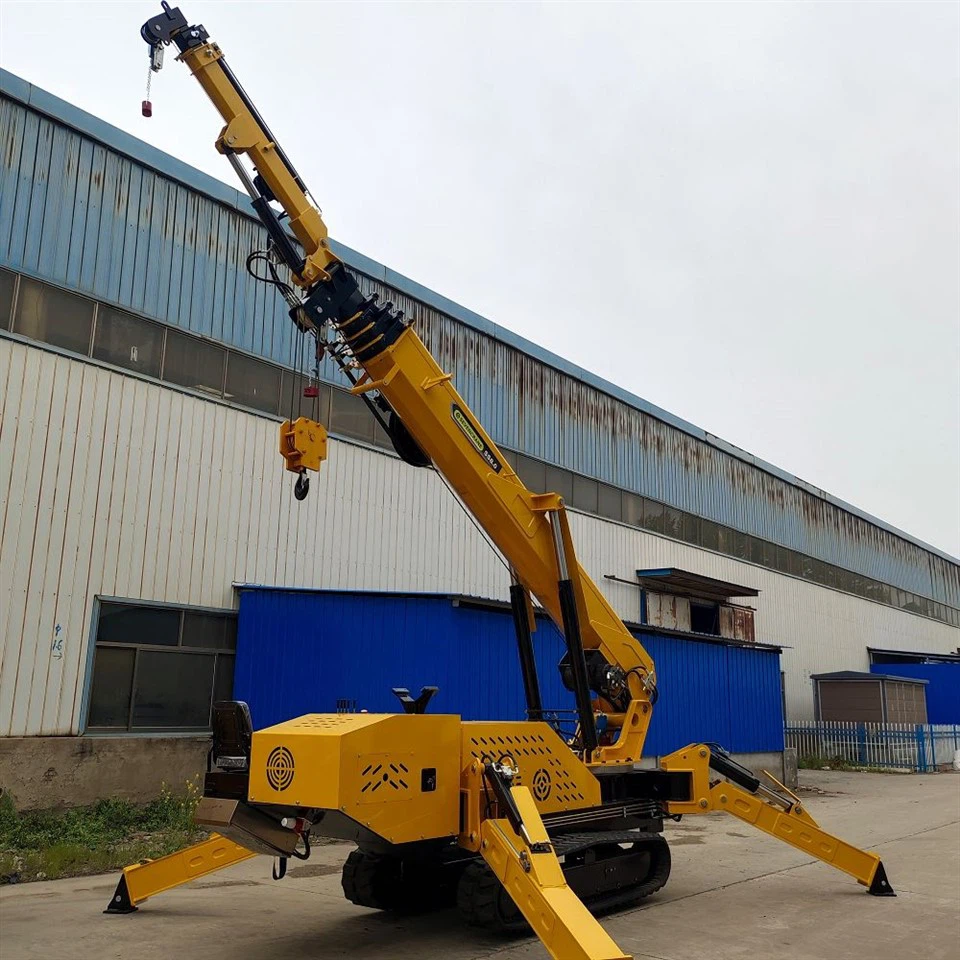
Our cranes are built with the latest technology and safety features, which makes them easier to operate and more reliable. And if you ever have any questions or need help with maintenance or operation, our customer support team is always just a phone call away.
If you're in the market for a crawler spider crane, whether it's a 1 Ton Spider Crane, Mobile Spider Crane, or Large Spider Crane, we'd love to hear from you. Contact us to discuss your specific needs and requirements, and we'll work with you to find the perfect crane for your project.
References
- Construction Industry Training Board (CITB). Crane Operator Training Manual.
- Occupational Safety and Health Administration (OSHA). Crane Safety Standards.
- Manufacturer's Manuals for Crawler Spider Cranes.