

Hey there! As a supplier of 12 ton spider cranes, I often get asked about how to measure the lifting accuracy of these powerful machines. It's a crucial aspect, especially when you're dealing with heavy loads and precision work. In this blog, I'll walk you through the key factors and methods to measure the lifting accuracy of a 12 ton spider crane.

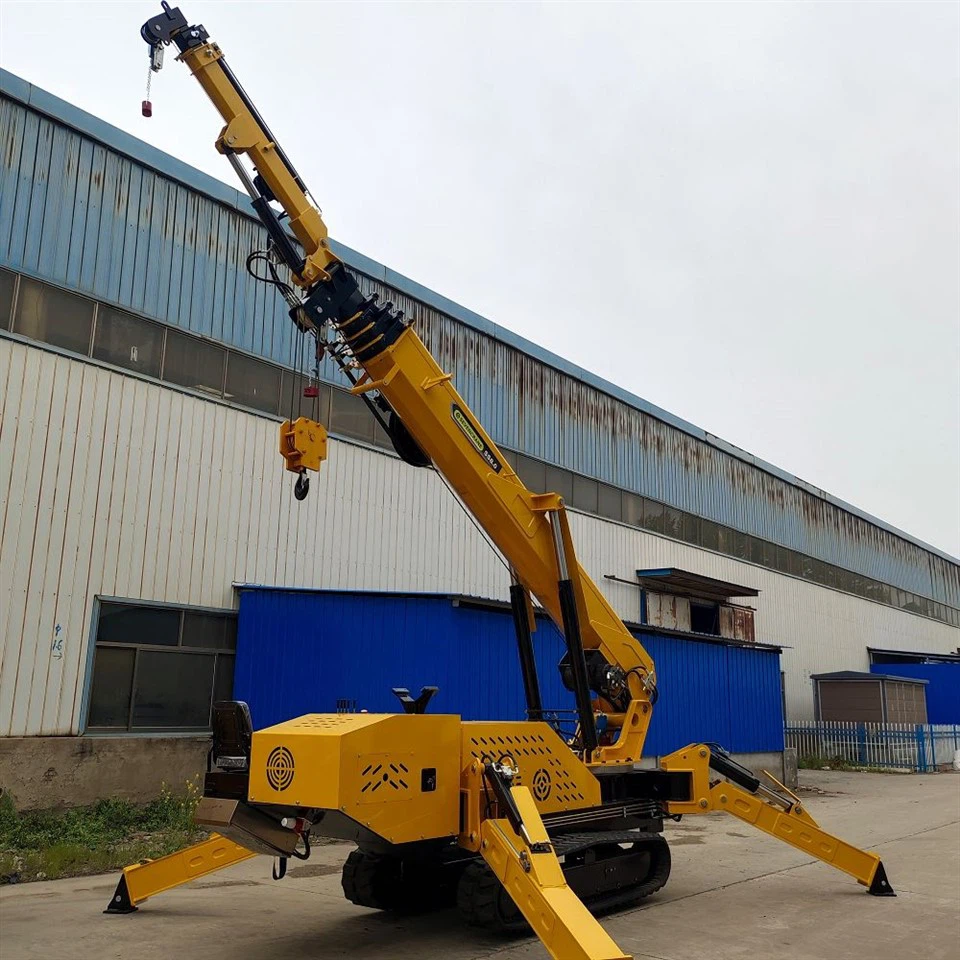
Understanding the Basics of a 12 Ton Spider Crane
Before we dive into measuring accuracy, let's quickly go over what a 12 ton spider crane is. These cranes are known for their versatility and compact design. They can be used in a variety of settings, from construction sites to industrial facilities. The "spider" part comes from their outriggers, which spread out like a spider's legs to provide stability.
We offer different types of spider cranes, like the Electric Spider Crane, which is great for indoor use as it's quiet and emission - free, and the Mobile Spider Crane, which can be easily moved around different job sites. There's also our 3 Ton Spider Crane for lighter lifting tasks.
Factors Affecting Lifting Accuracy
Load Characteristics
The weight, shape, and center of gravity of the load play a huge role in lifting accuracy. A 12 ton spider crane is designed to handle heavy loads, but if the load is unevenly distributed, it can cause the crane to sway or tilt during lifting. For example, a long and thin load like a steel beam needs to be properly balanced to ensure accurate placement.
Crane Setup
Proper setup of the crane is essential. The outriggers need to be fully extended and firmly planted on a stable surface. If the ground is uneven or soft, it can affect the crane's stability and, in turn, the lifting accuracy. Also, the boom length and angle need to be adjusted correctly based on the lifting requirements.
Operator Skill
Let's not forget about the operator. A skilled operator knows how to control the crane's movements precisely, making small adjustments to ensure the load is lifted and placed accurately. They're also aware of the crane's limitations and can make decisions to avoid any potential issues.
Measuring Lifting Accuracy
Positioning Accuracy
One of the main aspects of lifting accuracy is positioning the load at the right place. To measure this, you can use reference points on the ground or the structure where the load is to be placed. For example, you can mark the exact spot where the load should land with chalk or a marker. Then, use a measuring tape or a laser distance meter to measure the deviation between the actual position of the load and the intended position.
The acceptable deviation depends on the specific job requirements. In some cases, a few millimeters of deviation may be acceptable, while in others, it needs to be even more precise.
Height Accuracy
Another important factor is lifting the load to the correct height. You can use a height gauge or a level sensor on the crane's boom to measure the height. Compare the measured height with the required height to determine the accuracy.
In addition, you can use a plumb line or a laser level to check if the load is being lifted vertically. Any deviation from the vertical axis can affect the overall accuracy of the lift.
Angle Accuracy
The angle at which the load is lifted and placed also matters. You can use an inclinometer to measure the angle of the crane's boom. If the boom angle is incorrect, it can cause the load to swing or not be placed in the right position.
By regularly checking and adjusting the angle, you can ensure that the load is lifted and placed at the correct angle, improving the overall lifting accuracy.
Using Technology to Improve Lifting Accuracy
In today's world, technology has a big role to play in improving the lifting accuracy of spider cranes. Many modern 12 ton spider cranes are equipped with sensors and control systems that can provide real - time data on the crane's position, load weight, and boom angle.
For example, some cranes have load moment indicators (LMIs) that monitor the load and the crane's stability. These indicators can alert the operator if the load is approaching the crane's capacity or if there's a risk of instability.
There are also advanced control systems that allow for precise movement of the crane's boom and hoist. These systems can be programmed to follow specific lifting patterns, reducing the chances of human error.
Regular Maintenance and Calibration
To ensure consistent lifting accuracy, regular maintenance and calibration of the crane are essential. The crane's sensors, control systems, and mechanical components need to be checked and serviced regularly.
Calibration of the load cells, inclinometers, and other measuring devices should be done at regular intervals to ensure their accuracy. Any worn - out or damaged parts should be replaced immediately to prevent any issues with lifting accuracy.
Conclusion and Call to Action
Measuring the lifting accuracy of a 12 ton spider crane is a multi - faceted process that involves understanding the load, setting up the crane correctly, having a skilled operator, and using the right tools and technology. By paying attention to these factors, you can ensure that your lifting operations are safe and accurate.
If you're in the market for a 12 ton spider crane or any of our other spider crane models like the Electric Spider Crane, Mobile Spider Crane, or 3 Ton Spider Crane, we're here to help. Contact us for more information and to discuss your specific requirements. Let's work together to find the perfect crane for your needs.
References
- Crane Operator's Manuals
- Industry Standards for Crane Operations
- Technical Publications on Lifting Equipment