

Hey there! As a supplier of spider cranes, I've had my fair share of folks asking about the differences between spider cranes and traditional cranes. So, I thought I'd sit down and write a blog post to break it all down.
Let's start with the basics. Traditional cranes are the big, well - known machines you often see at large construction sites. They've been around for ages and are pretty much the go - to for heavy - lifting tasks in large open areas. On the other hand, spider cranes are a relatively newer addition to the lifting equipment scene.
Size and Mobility
One of the most obvious differences is the size. Traditional cranes are huge. They're like the giants of the lifting world. They need a lot of space to set up and operate. You can't just plop one down in a small backyard or an indoor area. They usually come on large trucks or are fixed in one place, and moving them around a site can be a real hassle. It often involves a lot of time, effort, and sometimes even special permits.
Spider cranes, however, are much more compact. They're like the little ninjas of the lifting industry. Take a look at our Mini Tracked Crawler Crane. It's designed to be small enough to fit through narrow doorways and operate in confined spaces. Their small size also means they're super mobile. They can be easily transported on a small trailer and set up in a fraction of the time it takes for a traditional crane. You can move them around a site with ease, making them perfect for jobs in tight spots like historical buildings or urban areas where space is limited.
Setup Time
Setting up a traditional crane is no joke. It's a complex process that requires a team of skilled workers. You've got to level the crane, anchor it properly, and sometimes even assemble large parts on - site. This setup can take hours, if not days, especially for the larger models. And let's not forget about the safety checks that need to be done before it can start working.
In contrast, spider cranes are a breeze to set up. They have a simple and efficient design. Most of our Small Spider Crane models can be set up in just a few minutes by one or two operators. This means less downtime on the job site and more time actually doing the work.
Lifting Capacity and Reach
When it comes to raw lifting power, traditional cranes generally win. They're built to handle massive loads, sometimes in the hundreds of tons. They have long booms that can reach great heights and distances, making them ideal for large - scale construction projects like skyscraper building or bridge construction.
But spider cranes shouldn't be underestimated. Our 12 Ton Spider Crane can handle a decent amount of weight, and considering their size, it's pretty impressive. They may not have the same reach as the largest traditional cranes, but they can still lift and place loads effectively in the areas where they're used. And in some cases, their ability to get closer to the load due to their small size can be more advantageous than having a really long reach.
Versatility
Traditional cranes are great for specific large - scale tasks, but their versatility can be limited. Once they're set up for a particular job, it can be difficult to change their configuration for other tasks.

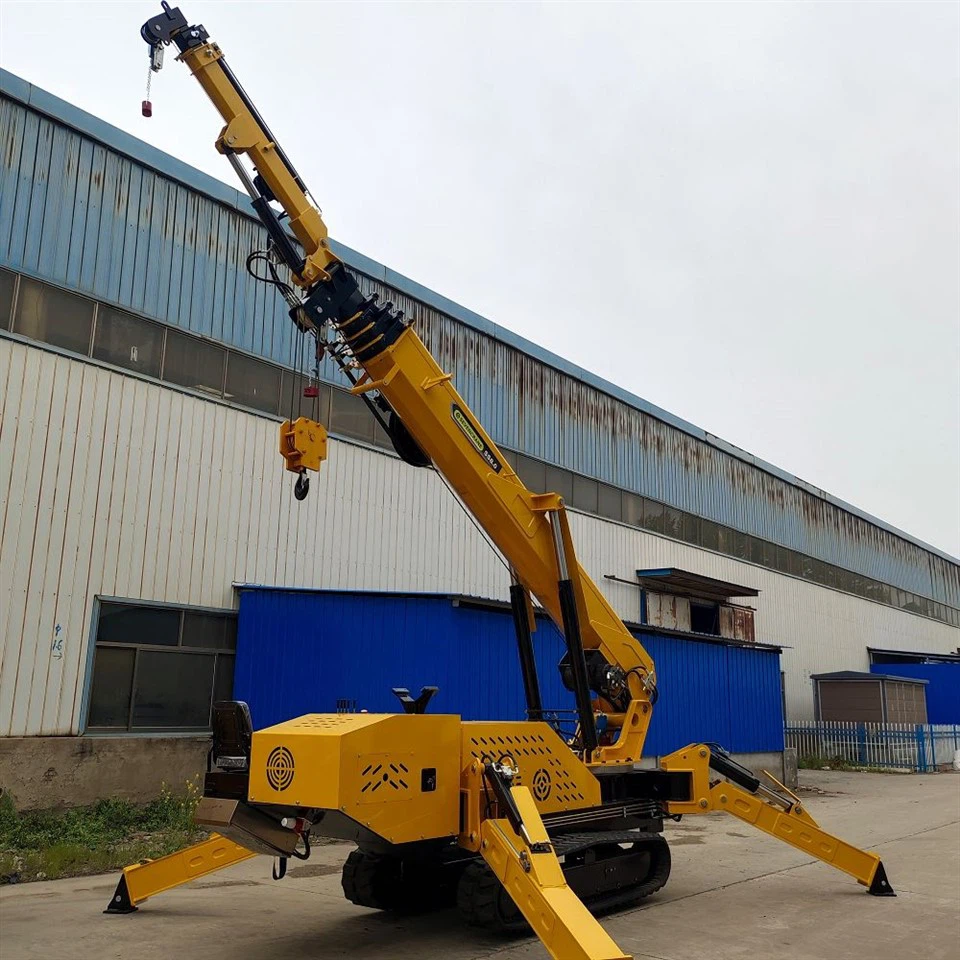
Spider cranes, on the other hand, are extremely versatile. You can use a Mobile Spider Crane for a variety of jobs, from lifting and placing glass panels in a high - rise building to moving heavy machinery in a factory. They can be equipped with different attachments like winches, grabs, and forks, allowing them to adapt to different job requirements easily.
Cost
Cost is always a factor when it comes to choosing the right crane for a job. Traditional cranes are expensive to purchase, operate, and maintain. The large size means they consume a lot of fuel, and the maintenance requires specialized parts and technicians.
Spider cranes are generally more cost - effective. They're cheaper to buy, and their lower fuel consumption and simpler maintenance mean lower operating costs. For smaller projects or companies on a budget, a spider crane can offer a lot of bang for your buck.
Safety
Safety is crucial in the lifting industry. Traditional cranes have a lot of safety features, but their large size and complex operation can sometimes lead to more risks. For example, the long booms can be affected by wind, and the large counterweights need to be carefully managed.
Spider cranes are designed with safety in mind. Their low center of gravity and stable outriggers make them less likely to tip over. They also have advanced control systems that allow operators to have more precise control over the lifting process, reducing the risk of accidents.
Conclusion
So, there you have it! The differences between spider cranes and traditional cranes are pretty significant. While traditional cranes are great for large - scale, open - space projects, spider cranes offer a lot of advantages in terms of size, mobility, setup time, versatility, cost, and safety.
If you're in the market for a lifting solution, whether it's a small - scale job or you need something that can work in tight spaces, I'd highly recommend considering a spider crane. We're a Spider Crane Factory with a wide range of spider crane models to suit different needs.
If you're interested in learning more or want to discuss your specific requirements, don't hesitate to get in touch. We're here to help you find the perfect spider crane for your project.
References
- Construction Equipment Handbook: Covers general information on different types of cranes.
- Crane Operator's Manuals: Provide in - depth details on the operation and safety of various cranes.