

As a supplier of diesel scissor lifts, I often encounter questions about the various features and systems of these robust machines. One question that comes up frequently is whether diesel scissor lifts have a load - sensing system. In this blog post, I'll explore this topic in detail.
Understanding Load - Sensing Systems
Before delving into whether diesel scissor lifts are equipped with load - sensing systems, it's essential to understand what a load - sensing system is. A load - sensing system is designed to detect the amount of load placed on a machine. It functions by using sensors that can measure the pressure, weight, or force exerted on different parts of the equipment.
In the context of scissor lifts, a load - sensing system would be able to accurately determine if the lift is carrying a load within its rated capacity or if it's being overloaded. This is crucial for safety reasons. Overloading a scissor lift can cause instability, structural damage, and even potentially lead to accidents, endangering the operators and those in the vicinity.
The Presence of Load - Sensing Systems in Diesel Scissor Lifts
Many modern diesel scissor lifts do come equipped with load - sensing systems. In the industry, there has been an increasing emphasis on safety and compliance with strict regulations, and load - sensing technology is an important part of this equation.
For our products, such as the 12m Diesel Scissor Lift, the load - sensing system works in a sophisticated way. Multiple pressure sensors are strategically placed throughout the hydraulic system. These sensors can detect the pressure changes that occur as a load is added to the platform of the scissor lift.
When the sensors detect that the pressure is approaching or exceeding the maximum rated load of the lift, the system takes action. It can trigger an alarm, which can be both audible and visual, to alert the operator that the load limit is being reached. Additionally, in some cases, the load - sensing system may restrict the lift's movement. For example, it might prevent further upward movement of the platform until the excess load is removed, thus ensuring that the lift operates within a safe range.
Benefits of Load - Sensing Systems in Diesel Scissor Lifts
Safety
The most significant benefit of load - sensing systems is undoubtedly safety. By preventing overloading, these systems reduce the risk of accidents. Operators can work with peace of mind, knowing that the lift is equipped with a mechanism that will protect them from potentially dangerous situations.
Equipment Longevity
Overloading a diesel scissor lift can cause excessive wear and tear on its components. The hydraulic system, in particular, can suffer from increased stress when carrying loads beyond the rated capacity. A load - sensing system helps to prevent this by ensuring that the lift is always operated within its designed limits. This, in turn, extends the lifespan of the equipment and reduces maintenance costs over time.
Compliance
In many regions, there are strict regulations regarding the safe operation of scissor lifts. Having a load - sensing system installed in the diesel scissor lift ensures compliance with these regulations. This is important for businesses as it helps them avoid costly fines and legal issues.
Different Types of Load - Sensing Technologies in Diesel Scissor Lifts
There are several types of load - sensing technologies used in diesel scissor lifts.
Pressure - Based Load Sensing
As mentioned earlier, pressure - based load sensing is a common approach. By measuring the pressure in the hydraulic cylinders, the system can estimate the load on the platform. This method is relatively simple and cost - effective. However, it has some limitations. For example, hydraulic fluid temperature can affect pressure readings, which may lead to slight inaccuracies in load measurement.
Strain - Gauge Load Sensing
Strain - gauge load sensing involves using strain gauges attached to the structural components of the scissor lift, such as the scissor arms. When a load is applied to the platform, the strain gauges detect the deformation (strain) of the material. This deformation is then converted into an electrical signal, providing an accurate measurement of the load. Strain - gauge load sensing is more precise than pressure - based load sensing, but it is also more expensive and complex to install and maintain.
Our Range of Diesel Scissor Lifts with Load - Sensing Systems
We offer a comprehensive range of diesel scissor lifts, all of which are equipped with advanced load - sensing systems to ensure maximum safety and performance.
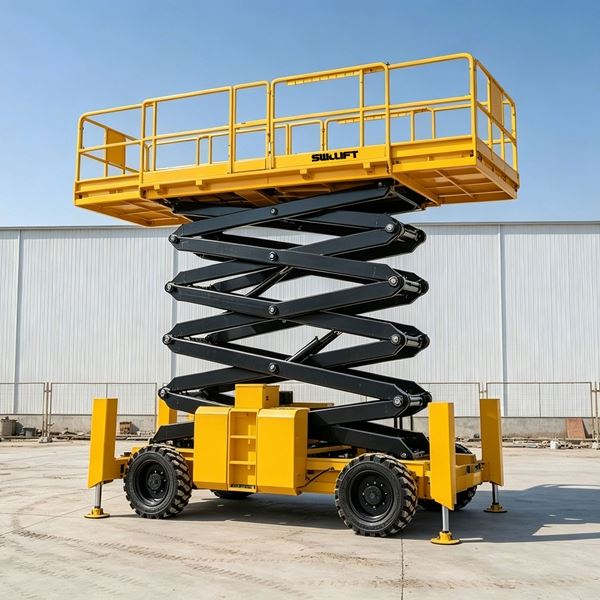

The Ce Certificated Diesel Scissor Lift has received the CE certification, which means it meets the strict safety and quality standards of the European Union. The load - sensing system in this lift has been rigorously tested to ensure accurate load detection and reliable operation.
Our Diesel Powered Scissor Lift is another popular choice among our customers. It is designed for heavy - duty applications and can handle large loads. The load - sensing system in this lift is calibrated to provide precise readings, even under high - stress situations.
For those who need a taller lift, the 20m Diesel Scissor Lift is an excellent option. With its impressive height and advanced load - sensing technology, it can operate safely at great heights while carrying out various tasks, such as building maintenance and construction work.
We also have the Swllift Diesel Boom Lift, which combines the features of a scissor lift and a boom lift. The load - sensing system in this unique equipment ensures that it can handle different types of loads in different configurations, providing maximum versatility for our customers.
Conclusion
In conclusion, many diesel scissor lifts, including the ones we supply, are indeed equipped with load - sensing systems. These systems play a vital role in ensuring the safety, longevity, and compliance of the equipment. Whether you are in the construction industry, facility maintenance, or any other field that requires the use of scissor lifts, having a load - sensing system is a must - have feature.
If you are interested in our diesel scissor lifts with advanced load - sensing systems, please feel free to contact us to discuss your procurement needs. We are more than happy to provide you with detailed product information, pricing, and any other assistance you may require.
References
- "Safety Standards for Aerial Work Platforms", International Organization for Standardization (ISO)
- "Hydraulic System Design and Operation", Fluid Power Society