

Hey there! I'm a supplier of towable boom lifts, and today I'm gonna share with you how to check the hydraulic hoses for leaks on these awesome machines.

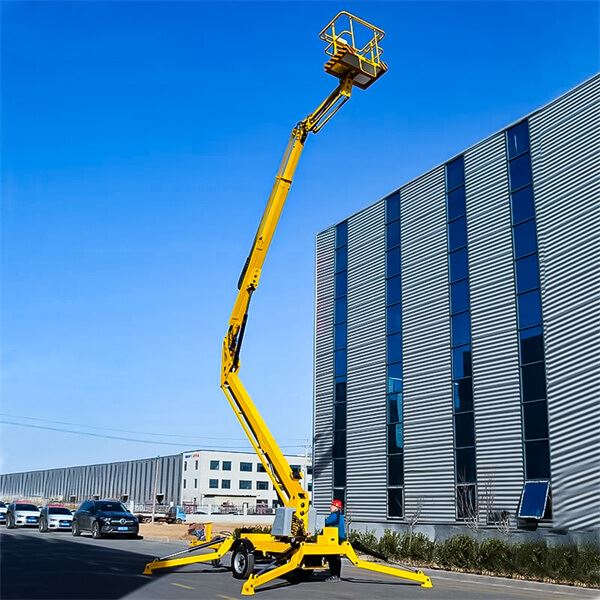
Towable boom lifts are super handy. They're mobile, easy to transport, and can reach some pretty high places. Whether you're working on a small construction site, doing some maintenance on a building, or just need to get up high for some tree trimming, a towable boom lift can be your best friend. We offer a variety of towable boom lifts, like the Small Towable Boom Lift, the Hydraulic Articulated Towable Boom Lift, and the 35 ft Towable Boom Lift.
Now, let's get into the nitty-gritty of checking those hydraulic hoses. First things first, safety comes first. Before you even think about getting near those hoses, make sure the boom lift is turned off and parked on a level surface. You don't want the lift to start moving unexpectedly while you're crawling around underneath it. Also, wear some protective gear like gloves and safety glasses. Hydraulic fluid can be pretty messy and it's not something you want getting in your eyes or on your skin.
Once you're all set with safety, it's time to do a visual inspection. Walk around the boom lift and take a good look at all the hydraulic hoses. These hoses are usually made of rubber or some kind of flexible material, and they carry the hydraulic fluid that powers the lift's movements. Look for any signs of damage like cuts, abrasions, or bulges. A cut in the hose can cause the hydraulic fluid to leak out, and a bulge could mean that the internal structure of the hose is starting to fail.
If you see any cuts or abrasions, it's a pretty clear sign that the hose needs to be replaced. You don't want to take any chances with a damaged hose, because a sudden failure could lead to a loss of hydraulic pressure and cause the boom lift to malfunction. Even a small cut can get bigger over time, so it's better to be safe than sorry.
Bulges are a bit more tricky. Sometimes, a small bulge might not be an immediate problem, but it's still something you should keep an eye on. A bulge could be caused by a weak spot in the hose or by too much pressure inside the system. If you notice a bulge, you might want to consult the boom lift's manual or give us a call for advice.
Another thing to look for during the visual inspection is any signs of hydraulic fluid leakage. Hydraulic fluid is usually a clear or slightly amber-colored liquid, and it can leave behind a shiny or greasy residue on the hoses or the surrounding parts of the boom lift. Check around the connections where the hoses are attached to the hydraulic cylinders and valves. These are common places for leaks to occur.
If you see a small amount of fluid around a connection, it might just be a minor leak that can be fixed by tightening the connection. Use a wrench to carefully tighten the fitting, but be careful not to over-tighten it, because that could damage the fitting or the hose. If the leak persists after tightening, you might need to replace the O-ring or gasket at the connection.
But what if you don't see any obvious signs of damage or leakage during the visual inspection? Well, that doesn't necessarily mean everything is okay. Sometimes, leaks can be hidden or they might only occur when the boom lift is in operation. That's when you need to do a pressure test.
To do a pressure test, you'll need a pressure gauge and some basic tools. First, connect the pressure gauge to the hydraulic system according to the manufacturer's instructions. Then, start the boom lift and slowly increase the pressure in the hydraulic system. As you do this, keep an eye on the pressure gauge and look for any sudden drops in pressure. A drop in pressure could indicate a leak in the system.
While the pressure is increasing, also check the hoses again for any signs of leakage. You might notice a small stream of fluid or a mist coming from a hose that wasn't leaking during the visual inspection. If you find a leak during the pressure test, mark the location of the leak with a piece of tape or a marker so you can easily find it later.
Once you've found a leak, it's time to fix it. If the leak is coming from a damaged hose, you'll need to replace the hose. Make sure you get the right size and type of hose for your boom lift. You can usually find this information in the boom lift's manual or by contacting us.
To replace the hose, first, turn off the boom lift and relieve the pressure in the hydraulic system. Then, use a wrench to remove the fittings that connect the hose to the hydraulic cylinders and valves. Be careful not to let any hydraulic fluid spill out. Once the old hose is removed, clean the fittings and install the new hose. Make sure the hose is properly seated and the fittings are tightened securely.
After replacing the hose, do another pressure test to make sure there are no more leaks. If everything checks out, you're good to go!
Regularly checking the hydraulic hoses for leaks is an important part of maintaining your towable boom lift. By doing these checks on a regular basis, you can prevent major problems from occurring and keep your boom lift in good working condition.
If you have any questions about checking the hydraulic hoses on your towable boom lift or if you're interested in purchasing one of our high-quality towable boom lifts, don't hesitate to reach out to us. We're here to help you make the most of your boom lift and ensure your safety on the job.
References:
- Manufacturer's manuals for towable boom lifts
- Industry standards for hydraulic system maintenance