

Hey there! As a supplier of spider cranes, I often get asked about the visibility from the operator's cab of these nifty machines. So, I thought I'd sit down and share some insights on this topic.
First off, let's talk about what a spider crane is. Spider cranes are compact, lightweight, and highly maneuverable cranes that are designed to work in tight spaces. They're called "spider" cranes because of their long, flexible legs that can be extended and adjusted to provide stability on uneven surfaces. These cranes are commonly used in construction, maintenance, and industrial applications where traditional cranes may not be able to fit or operate safely.
Now, let's get to the main question: what's the visibility like from the operator's cab of a spider crane? Well, it depends on a few factors, such as the design of the cab, the position of the operator, and the type of work being done.
Most modern spider cranes are designed with the operator's visibility in mind. The cabs are typically located at a high position on the crane, providing a clear view of the work area. The windows are large and made of high-quality glass, which offers excellent visibility even in low-light conditions. Some cabs also have adjustable seats and controls, allowing the operator to find the most comfortable and ergonomic position for maximum visibility.
In addition to the design of the cab, the position of the operator also plays a crucial role in visibility. The operator's seat is usually located in the center of the cab, providing a panoramic view of the surroundings. The controls are also within easy reach, allowing the operator to quickly and safely adjust the crane's position and movement.
Another factor that affects visibility is the type of work being done. For example, if the crane is being used to lift heavy loads, the operator may need to focus on the load and the lifting equipment, which can limit their view of the surrounding area. On the other hand, if the crane is being used for precision work, such as installing glass panels or working on a rooftop, the operator may need to have a clear view of the work area to ensure accuracy and safety.
To improve visibility in these situations, many spider cranes are equipped with additional features, such as cameras and sensors. These devices can provide the operator with a real-time view of the work area, allowing them to monitor the load and the surroundings more effectively. Some cameras can also be adjusted to provide a wider or narrower view, depending on the operator's needs.
Now, let's take a look at some of the different types of spider cranes and their visibility features.
Large Spider Crane: These cranes are designed for heavy-duty applications and are typically larger and more powerful than other types of spider cranes. They have a high cab position and large windows, providing excellent visibility of the work area. Some large spider cranes also have additional cameras and sensors to improve visibility in challenging conditions.
1 Ton Spider Crane: These cranes are ideal for light-duty applications and are often used in indoor or outdoor settings where space is limited. They have a compact design and a low cab position, which can make it easier to maneuver in tight spaces. The windows are still large and provide good visibility, but the operator may need to be more aware of their surroundings due to the lower position of the cab.
10 Ton Spider Crane: These cranes are designed for heavy lifting applications and are typically larger and more powerful than 1 ton spider cranes. They have a high cab position and large windows, providing excellent visibility of the work area. Some 10 ton spider cranes also have additional cameras and sensors to improve visibility in challenging conditions.

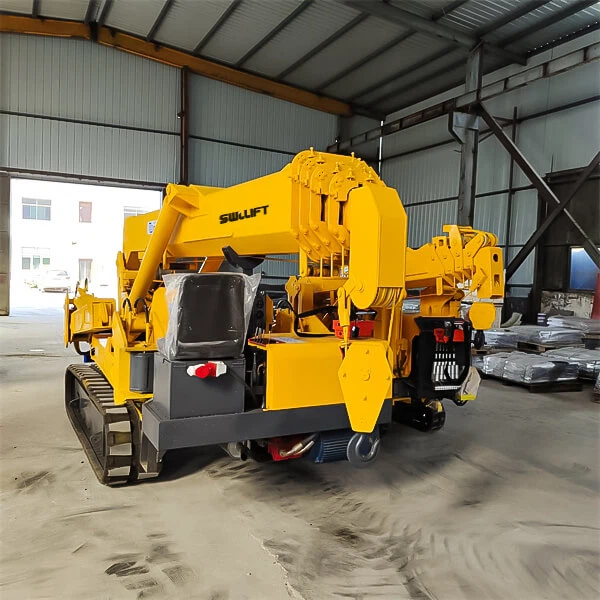
In conclusion, the visibility from the operator's cab of a spider crane is generally excellent, thanks to the design of the cab, the position of the operator, and the additional features that are available. However, it's important to remember that visibility can still be affected by factors such as the type of work being done and the conditions of the work area. To ensure maximum visibility and safety, it's important to choose a spider crane that is suitable for the job and to follow all safety guidelines and procedures.
If you're interested in purchasing a spider crane or have any questions about the visibility or other features of our products, please don't hesitate to contact us. We'd be happy to help you find the right crane for your needs and to provide you with all the information you need to make an informed decision.
References
- Crane Operator's Manuals
- Industry Reports on Spider Crane Design and Functionality