

When it comes to the world of vertical mast lifts, one crucial aspect that often gets overlooked is the noise level during operation. As a supplier of vertical mast lifts, I've seen firsthand how noise can impact both the operator and the surrounding environment. In this blog post, I'll delve into what the noise level of a vertical mast lift during operation typically is, the factors that influence it, and why it matters.
Understanding Noise Levels in Vertical Mast Lifts
Noise levels are measured in decibels (dB). A normal conversation usually takes place at around 60 dB, while a vacuum cleaner operates at about 70 dB. For vertical mast lifts, the noise level during operation can vary depending on several factors, but generally, it falls within a certain range.
On average, a standard vertical mast lift produces noise levels between 70 dB and 85 dB when in operation. This level of noise is comparable to that of a busy street or a power lawnmower. However, it's important to note that this is a general estimate, and the actual noise level can be higher or lower depending on the specific model and its design.
Factors Influencing Noise Levels
Type of Power Source
One of the primary factors that influence the noise level of a vertical mast lift is the type of power source it uses. There are mainly two types: electric and engine-powered.
Electric Mast Lifts: Electric Mast Lift are known for being relatively quiet. They typically operate at the lower end of the noise spectrum, usually around 70 dB to 75 dB. This is because electric motors produce less mechanical noise compared to combustion engines. The absence of exhaust noise and the smooth operation of electric components contribute to their quieter performance. Electric mast lifts are ideal for indoor use, where noise can be a significant concern, such as in warehouses, shopping malls, and hospitals.

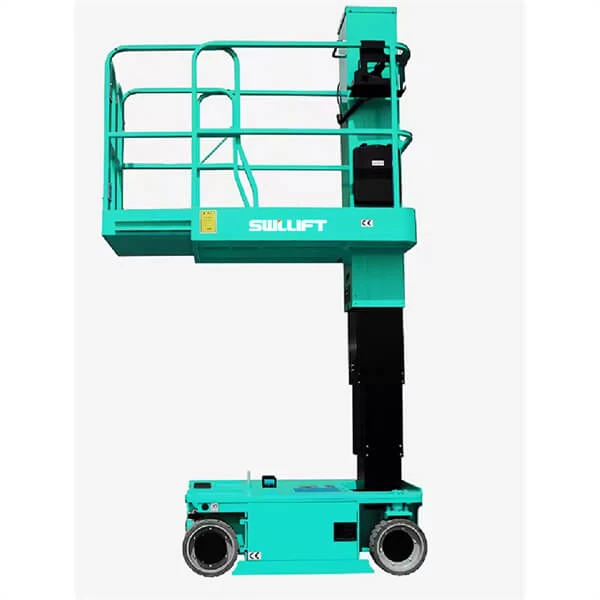
Engine-Powered Lifts: Lifts powered by gasoline, diesel, or propane engines tend to be louder. These engines generate noise from the combustion process, exhaust system, and mechanical components. Engine-powered vertical mast lifts can produce noise levels ranging from 75 dB to 85 dB or even higher, depending on the engine size and design. They are more suitable for outdoor applications where noise regulations may be less strict.
Lift Design and Construction
The design and construction of the vertical mast lift also play a crucial role in determining its noise level.
Quality of Components: Lifts that use high-quality components and precision engineering tend to be quieter. For example, well-lubricated moving parts, such as gears and bearings, produce less friction and noise. Similarly, a well-designed hydraulic system can operate smoothly, reducing the noise associated with fluid flow and pressure changes.
Sound Insulation: Some vertical mast lifts are equipped with sound insulation materials to reduce noise transmission. These materials can be used to line the engine compartment, hydraulic pumps, and other noise-generating components. By absorbing and dampening sound waves, sound insulation can significantly lower the overall noise level of the lift.
Operating Conditions
The operating conditions can also affect the noise level of a vertical mast lift.
Load Capacity: When a lift is carrying a heavy load, it may require more power to operate, which can result in increased noise levels. The motor or engine has to work harder to lift and move the load, causing more mechanical stress and noise.
Speed of Operation: Faster operation speeds can also lead to higher noise levels. As the lift moves up and down more quickly, there is more movement and vibration in the mechanical components, which can generate additional noise.
Why Noise Levels Matter
Operator Comfort and Safety
High noise levels can have a significant impact on the operator's comfort and safety. Prolonged exposure to loud noise can cause hearing damage, fatigue, and stress. Operators who are constantly exposed to excessive noise may experience reduced concentration and productivity, which can increase the risk of accidents. By choosing a vertical mast lift with a lower noise level, operators can work in a more comfortable and safe environment.
Environmental Considerations
In many work environments, noise pollution is a concern. For example, in residential areas or near hospitals, excessive noise from construction equipment can be a nuisance to the surrounding community. Using a quiet vertical mast lift can help minimize the impact on the environment and reduce the likelihood of noise complaints.
Compliance with Regulations
There are often noise regulations in place, especially in indoor and urban areas. These regulations set limits on the maximum allowable noise levels for construction equipment, including vertical mast lifts. By ensuring that our lifts meet these regulations, we can help our customers avoid potential fines and legal issues.
Our Product Range and Noise Levels
At our company, we offer a wide range of vertical mast lifts, including Vertical Mast Boom Lift 26 ft and Single Mast Lift. Our electric mast lifts are designed to be as quiet as possible, making them suitable for indoor applications where noise is a concern. Our engine-powered lifts, on the other hand, are built to provide reliable performance in outdoor settings while still keeping the noise levels within acceptable limits.
We understand the importance of noise levels in vertical mast lifts, and we are committed to providing our customers with high-quality, quiet, and efficient equipment. Whether you need a lift for indoor or outdoor use, we have the right solution for you.
Contact Us for Purchase and Consultation
If you're in the market for a vertical mast lift and want to learn more about our products' noise levels and other features, we'd love to hear from you. Our team of experts can provide you with detailed information about our product range, help you choose the right lift for your specific needs, and answer any questions you may have. Contact us today to start the conversation and take the first step towards purchasing a high-quality vertical mast lift.
References
- OSHA (Occupational Safety and Health Administration). Noise Exposure Regulations.
- ISO (International Organization for Standardization). Standards for Noise Measurement in Construction Equipment.