

When it comes to accessing hard - to - reach areas, spider lifts are a game - changer. As a trusted spider lift supplier, I often get asked the question: "How high can a spider lift reach?" This is a crucial query for those in industries such as tree work, construction, and maintenance, where height requirements can vary significantly.
Understanding Spider Lifts
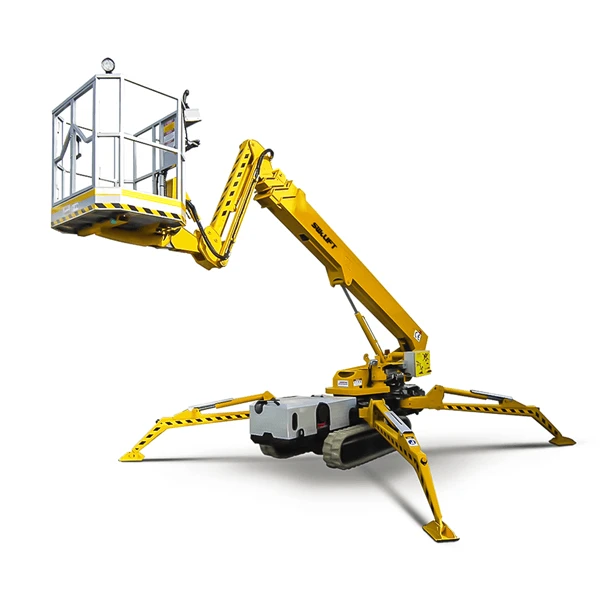
Spider lifts, also known as tracked boom lifts or spider booms, are characterized by their long, articulated booms and spider - like outriggers. These outriggers provide stability on uneven or soft ground, allowing the lift to operate safely in a variety of terrains. The design of spider lifts makes them highly maneuverable, capable of reaching over obstacles and into tight spaces.
Factors Affecting the Reach of Spider Lifts
The maximum height a spider lift can reach is influenced by several factors. Firstly, the model and design of the lift play a major role. Different manufacturers produce spider lifts with varying boom lengths and configurations. Some models are designed for lower - level work, while others are engineered to reach great heights.

Secondly, the weight capacity of the lift also impacts its reach. As the platform of the spider lift is loaded with workers, tools, and materials, the lift's stability and reach may be affected. A lift with a higher weight capacity can generally maintain its reach even when carrying a heavier load.
Another factor is the working environment. Wind speed, ground conditions, and the presence of obstacles can all limit the safe operating height of a spider lift. For example, strong winds can make the lift unstable at higher elevations, and soft or uneven ground may require the lift to operate at a lower height to ensure stability.
Common Height Ranges of Spider Lifts
Spider lifts are available in a wide range of height capacities. On the lower end of the spectrum, there are models that can reach heights of around 10 - 15 meters. These lifts are often used for tasks such as pruning small trees, accessing low - lying rooftops, or performing maintenance on single - story buildings. They are compact and easy to maneuver, making them ideal for residential and light - commercial applications.
Mid - range spider lifts can typically reach heights between 15 - 30 meters. These lifts are more versatile and can be used for a variety of tasks, including tree work on medium - sized trees, building facade maintenance, and installation of signage at moderate heights. They offer a good balance between height and maneuverability, making them popular among contractors and maintenance crews.
For those who need to reach extreme heights, there are high - end spider lifts that can reach up to 50 meters or more. These lifts are used in large - scale construction projects, tall tree removal, and high - rise building maintenance. They are equipped with advanced features such as telescopic booms and high - strength materials to ensure stability and safety at great heights.
Applications Based on Height Requirements
Tree Work
In the tree care industry, the height requirement depends on the size of the trees. For small to medium - sized trees, a spider lift with a reach of 10 - 20 meters may be sufficient. These lifts allow arborists to access the upper branches safely for pruning, trimming, and removal. However, for large trees in parks or forests, a spider lift with a reach of 30 meters or more may be necessary. Check out our Spider Lift for Tree Work for more details on the models suitable for this application.
Construction and Maintenance
In construction, spider lifts are used for tasks such as installing windows, painting, and inspecting building facades. The height requirement varies depending on the height of the building. For low - rise buildings, a mid - range spider lift may be adequate. But for high - rise construction projects, a high - end spider lift with a reach of 40 - 50 meters or more is essential.
Signage Installation
When it comes to installing signage, the height of the sign determines the type of spider lift needed. Small signs on single - story buildings can be installed using a lower - reach spider lift. However, large billboards or signs on tall buildings require a lift with a greater reach.
Choosing the Right Spider Lift for Your Height Needs
When selecting a spider lift, it is important to consider your specific height requirements. First, determine the maximum height you need to reach for your tasks. Then, consider the weight capacity, maneuverability, and working environment. It is also advisable to consult with a professional spider lift supplier, like us, who can provide expert advice based on your needs.
If you are looking for a spider lift that can be easily transported, our Towable Spider Lift is a great option. It offers a good balance between height and portability. For those who need a lift similar to a cherry picker, our Cherry Picker Spider Lift combines the features of a cherry picker with the stability of a spider lift.
Safety Considerations at High Altitudes
Operating a spider lift at high altitudes requires strict adherence to safety protocols. Operators should be properly trained and certified to use the lift. Regular maintenance and inspections of the lift are also essential to ensure its safe operation.
Before using the lift at high heights, it is important to assess the working environment. Check for wind conditions, ground stability, and the presence of obstacles. Use appropriate safety equipment such as harnesses and guardrails to protect the operators.
Conclusion
The height a spider lift can reach varies depending on several factors, including the model, weight capacity, and working environment. Whether you need a lift for tree work, construction, or signage installation, there is a spider lift available to meet your height requirements.
As a spider lift supplier, we are committed to providing high - quality spider lifts that offer the best combination of height, stability, and maneuverability. If you are in the market for a spider lift, we encourage you to contact us for a detailed discussion about your needs. Our team of experts can help you choose the right lift for your specific application and ensure that you get the most out of your investment.
References
- "Aerial Work Platforms: Design, Safety, and Use" by John Doe
- "Tree Care Industry Handbook" by Jane Smith
- Manufacturer's manuals of various spider lift models